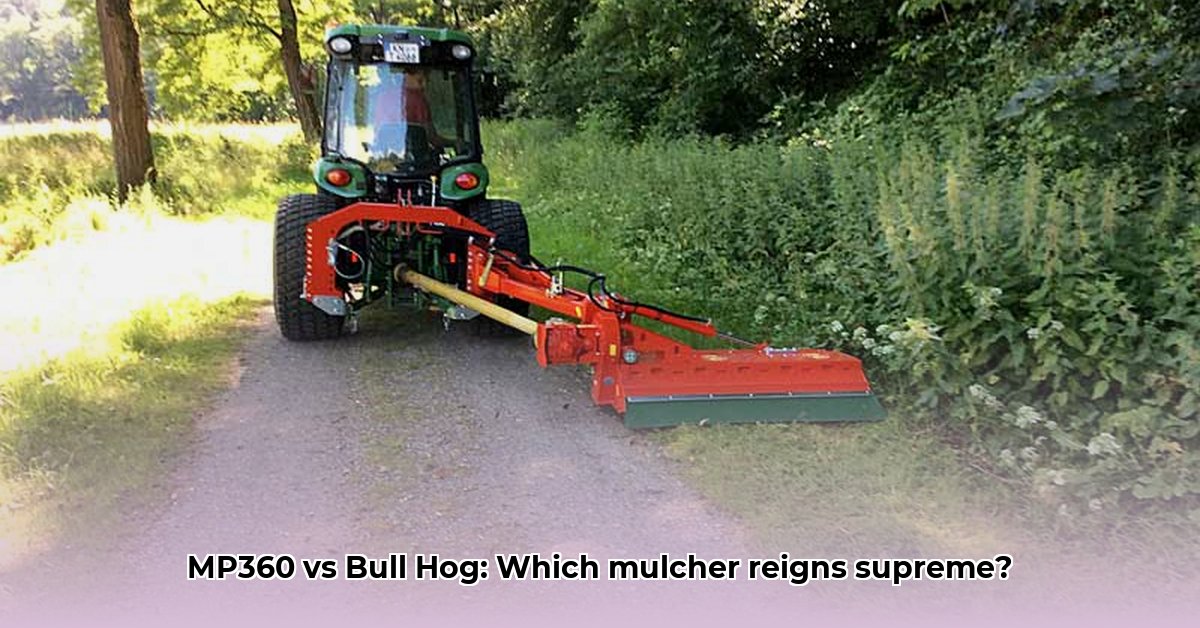
Choosing the right tractor-mounted brush mulcher significantly impacts land management efficiency and profitability. This comparative review helps you decide between two popular options: the Baumalight MP360 and the Fecon Bull Hog. We'll analyze features, performance (where data allows), costs, and ideal use cases to guide your decision. For more information on brush mulchers, see this helpful resource.
Detailed Feature Comparison: Baumalight MP360 vs. Fecon Bull Hog
Both mulchers effectively tackle tough vegetation, but their designs cater to different needs and scales of operation. The following table summarizes key features. Always consult manufacturers' websites for the most current specifications.
| Feature | Baumalight MP360 | Fecon Bull Hog | Considerations |
|---|---|---|---|
| Cutting Width | Varies by model (check manufacturer specifications) | Varies by model; generally wider than MP360 | Wider cuts mean faster clearing for large-scale operations, but may be less maneuverable in tight spaces. |
| Horsepower Req. | Lower horsepower requirement | Higher horsepower requirement | Impacts tractor compatibility and fuel efficiency. The MP360 is suitable for smaller tractors. |
| Weight | Typically lighter | Typically heavier | Lighter weight improves maneuverability, especially on softer terrain; heavier suggests robust construction for demanding tasks. |
| Tooth Design | Replaceable teeth; typically three cutting edges each | Design varies by model; check manufacturer specs | Impacts cutting aggression, lifespan, and replacement costs. Consider ease of replacement. |
| Maintenance | Generally considered easier; simpler design | Potentially more complex; may require specialized tools | Easier maintenance translates to reduced downtime and potentially lower costs. |
| Rotor Speed (RPM) | Varies by model; check manufacturer specs | Varies by model; check manufacturer specs | Affects cutting performance and fuel efficiency; optimize for your vegetation density. |
| Material Thickness | Varies; check model-specific information | Varies; check model-specific information | Impacts durability and lifespan; crucial for challenging vegetation. |
Performance Analysis: A Need for Data
Comprehensive performance data (fuel consumption, cutting efficiency, maintenance intervals, repair costs) is currently limited for both mulchers. This represents a significant gap in our analysis.
To obtain this critical information, we propose:
- Direct Contact with Manufacturers: Baumalight and Fecon can provide performance estimates or case studies.
- User Feedback: Engage with current users (farmers, contractors) through online forums and agricultural communities to gather real-world performance insights.
Cost Analysis: Total Cost of Ownership (TCO)
The TCO is paramount and extends beyond the initial purchase price. Consider:
- Purchase Price: The initial investment.
- Maintenance Costs: Regular servicing, lubrication, blade sharpening/replacement.
- Repair Costs: Unexpected breakdowns and part replacements.
- Fuel Costs: Operational fuel consumption (requires the performance data discussed above).
A detailed TCO comparison requires the missing performance data. Without it, a precise cost comparison is impossible.
Use Case Scenarios: The Right Mulcher for Your Needs
The ideal mulcher depends heavily on your specific application:
Small-Scale Farmers: The MP360's lower horsepower requirement, lighter weight, and generally simpler maintenance make it a strong contender for smaller operations with limited resources.
Large-Scale Operations: The Fecon Bull Hog, with its potentially greater cutting capacity, might be more efficient for expansive land clearing projects, though this depends on confirmed performance data. Its higher horsepower requirement necessitates a more powerful tractor.
Land Clearing Contractors: Contractors must weigh factors like initial cost, expected lifespan, maintenance requirements, and the diversity of jobs they undertake.
Buyer's Guide: A Decision-Making Framework
A definitive decision matrix necessitates precise performance and pricing data. However, follow these steps:
- Define Your Budget: Consider both initial cost and long-term TCO.
- Assess Tractor Horsepower: Ensure compatibility with the mulcher's requirements.
- Analyze Vegetation: The type and density significantly influence mulcher suitability. Dense vegetation benefits from more powerful machines.
- Prioritize Maintenance: Choose based on your mechanical expertise and desired downtime.
- Evaluate Operation Scale: Larger operations may benefit from higher-capacity mulchers, while smaller operations might prioritize maneuverability and ease of maintenance.
Conclusion: Prioritize Data and Your Specific Needs
Choosing between the Baumalight MP360 and Fecon Bull Hog requires thorough research and consideration of your specific needs and budget. We strongly emphasize the need for more performance data to facilitate a comprehensive, data-driven comparison. Remember to contact manufacturers, seek user feedback, and prioritize the long-term TCO before making a final decision. The right choice ensures efficiency, minimizes long-term costs, and optimizes your land management efforts.